09.27
Resting on Space
The sixth of the nine stages, tried instead of described. Eckhart Tolle explains how to rest your attention on space, a short practice lets you try it, and then Thầy’s books say what happened.
This page is our current understanding, written as we work through the book together — it changes as our understanding changes.
The Reading
Verse 9 reads:
All manifestations bear the marks of both the individual and the collective. The maturation of store consciousness functions in the same way in its participation in the different stages and realms of being.
The two readings before this one described the sixth of the nine stages, the Realm of Limitless Space. The first described it from outside, as the first of four levels where the mind has less and less to rest on. The second described it from inside, where perception is still making a sign and the sign is of open space.
This reading does not add a level. It goes back to the sixth stage and tries it. The practice further down the page takes five or six minutes, and it is the centre of the reading. The sections before it explain where the practice comes from and how Thầy’s books read what happens in it.
The Teaching
What we can try, and what we can’t
The two earlier readings made two claims about the sixth stage. The mind goes very quiet there, and perception is still working. You can agree with both claims from an armchair, and you cannot check either of them there. You can check both in a few minutes of sitting.
You will not be trying the sixth stage itself. The book lists the Realm of Limitless Space directly after the fourth dhyāna, which is the stillest level of the realm of form. A few minutes of noticing the space in your living room is not that. It is the same move on a scale anyone can try: you take your attention off things and rest it on the space they are in. The reading on the last four stages offered three everyday tastes of these levels, which were floating in a lake, being lost in music, and the minute before sleep. This is a fourth taste, and unlike the other three you can do it on purpose.
Tolle’s instructions
In this book Thầy gives the sixth stage a name and a number. In The Heart of the Buddha’s Teaching he also names what the mind rests on there, which is limitless space. Neither book tells you how to begin or what it feels like. The best instructions we found are not Buddhist. They are in chapter seven of Eckhart Tolle’s The Power of Now, in two short sections called Silence and Space.
Tolle is not writing about the nine stages, and he never mentions them. We put his instructions next to the sixth stage because the move is the same. Where he and Thầy disagree, this guide follows Thầy.
Tolle starts with sound. He asks you to listen to a dog barking in the distance, and then to pay more attention to the silence around the bark than to the bark. Then he does the same thing with a room. The furniture is inside the room, and the walls and floor mark its edges, but none of them is the room. The room is the space. “Everybody pays attention to the things in space, but who pays attention to space itself?” His instruction is to become aware of the space all around you, and to feel it and not think about it.
Then he says what happens next: “You cannot think and be aware of space”. His reason is that thoughts are objects too, so when your attention comes off objects it comes off your thoughts as well. You can test this in the practice below. The mind goes quiet, and it goes quiet fast.
The last thing he gives is his reading of that quiet: “By becoming aware of the empty space around you, you simultaneously become aware of the space of no-mind, of pure consciousness: the Unmanifested.” He calls the contemplation of space a portal into it. A few paragraphs later he says what the portal frees you from, and the next reading starts there.
Thầy’s reading of the same quiet
Thầy’s school does not dispute the quiet. It gives a different account of it, and the account starts with a question the school asks about every state of mind. In his commentary on Verse 24, Thầy writes: “Before we can speak about awareness, we have to ask, ‘awareness of what?’”
At the sixth stage that question has an answer. You are aware of space. So perception is still working, and it is working on a sign of open space. That sign is much fainter than the sign of a chair or a worry, which is why thinking finds so little in it to get hold of. The mind-only school’s explanation of the quiet is that perception has a very fine object. Perception has not stopped, and you have not stepped outside the mind.
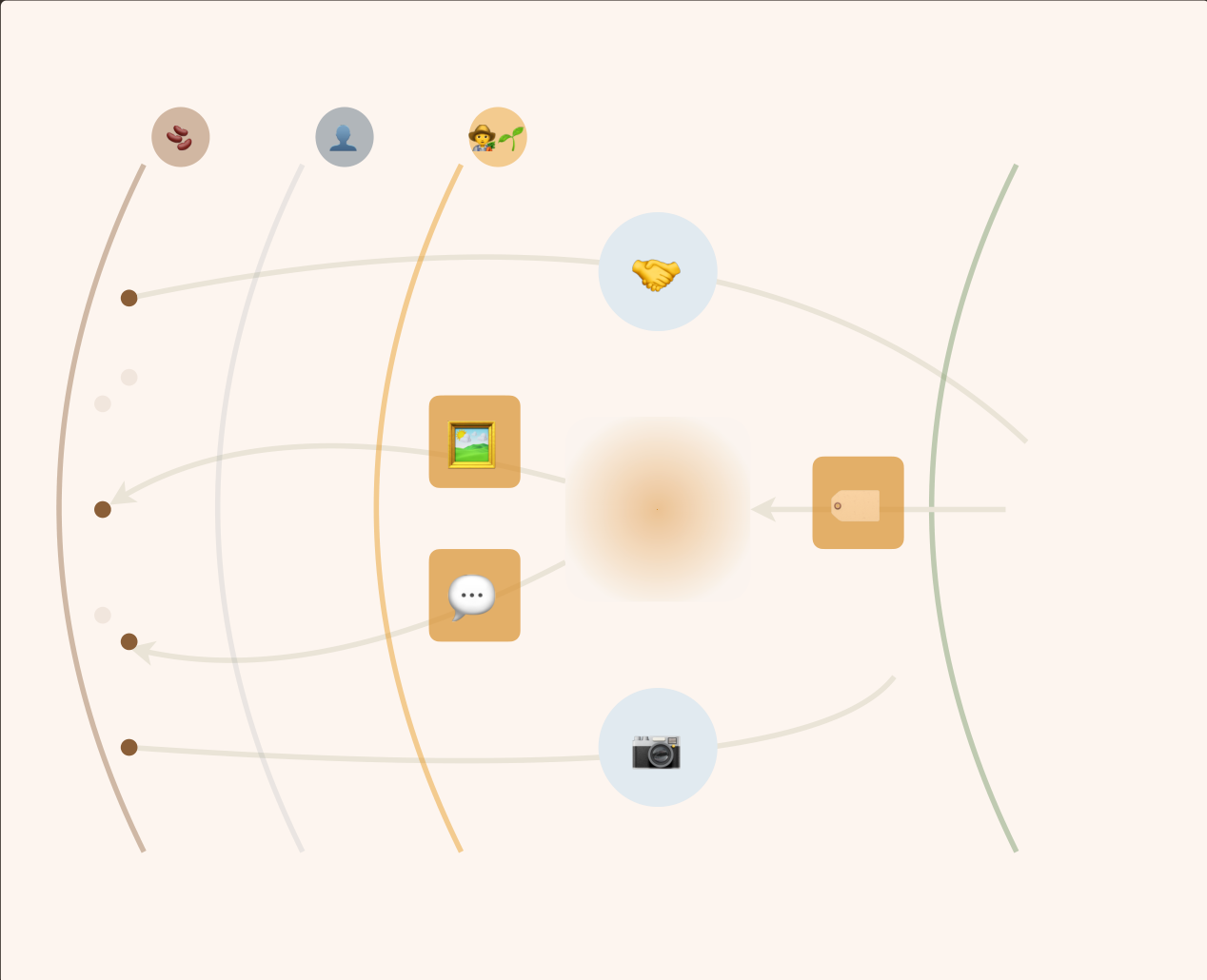
The second part of Thầy’s account is that the quiet does not reach the seeds. Chapter Three says of the whole realm of non-form that “many desires are still dormant in the depth of our consciousness.” The depth of our consciousness is the store consciousness, and the seeds in it were not touched by your quiet minutes. They were not watered either, and that is a large part of why resting on space feels good. But whatever was waiting for you before you sat down is still waiting when you get up.
Thầy’s word for a quiet state used this way is refuge. At the 2013–14 Winter Retreat he said of people who can stay in deep concentration for days that “they only take refuge in the dhyana… the fourth dhyana and the fourth [formless absorption].” A refuge is real, and it helps. It is not the way out. The next reading gives his reasons in full.
What Thầy does with space
Thầy does not tell anyone to stop resting on space. In The Heart of the Buddha’s Teaching he says what to do once you are there:
“When we begin to practice this concentration, everything seems to be space. But as we practice more deeply, we see that space is composed of and exists only in ‘non-space elements,’ like earth, water, air, fire, and consciousness.”
(He calls it the fifth level in that book, because he counts the levels differently there. It is this book’s sixth.)
In that passage the resting comes first, and then he looks into the thing he is resting on. He finds that space depends on everything that is not space. His list is earth, water, air, fire and consciousness. In a room, that means the walls that give the room its shape, the air, the body sitting in it, and the mind that notices the space. He concludes: “So space and everything else inter-are.”
Tolle tells his reader not to try to understand space, because for him there is nothing in it to understand. Thầy looks into it, and he sees that space cannot exist by itself. That looking is a different practice from the resting, and the next reading is about it.
The Practice
Five or six minutes, on your own, in any room. Read one line, then stay with it for about nine breaths before you read the next.
Sit, and let the breath settle.
Now let go of the things in this room. Notice the space around them. The space between you and the wall. The space the sounds travel through. Space with no edge.
Rest in that space. There is nothing to hold on to.
Stay with it. Notice how quickly the mind goes quiet here.
Now, gently, ask one question. What are you aware of?
You are aware of space. So you are still aware of something. Perception is still working. It is working on something very fine.
Come back to the breath. Feel the body on the chair or the cushion. Open your eyes.
If it felt good, let it. Nothing in Thầy’s account says the quiet is a mistake.
Contemplation Questions
When you took your attention off the things around you, what happened to your thinking?
When the mind went quiet, what were you still aware of?
Tolle would say you had touched something beyond the mind. Thầy would say the mind was resting on a very fine object. Which description fits what you found?
Carry whichever of these stays with you — into your own quiet reflection, or into conversation with others.
Going Deeper
2 notes ·Two notes for anyone who wants to follow a thread further.
Tolle says space cannot become an object. Does that answer Thầy?
In the Space section a questioner asks Tolle what this “nothing” is, and he refuses the question: “Your mind is trying to make nothing into something. The moment you make it into something, you have missed it.” A few lines later he says of space, “It cannot become an object of knowledge.” A reader could take that as a reply to Thầy in advance. If space cannot be an object, then a mind resting on space is not resting on an object, and perception has nothing to work on.
The two writers use the word object for different things. Tolle means an object of thought. His examples are a scientific theory of space and a Ph.D. on “nothing”, and his advice is to feel the space and not think about it. The mind-only school means something wider. In the chapter on Verse 17 Thầy writes, “A consciousness is always consciousness of something,” and the something is the object whether or not any thinking is going on. A sound you hear before you have named it is already the object of ear consciousness. By that definition Tolle’s own instruction, “become aware of the space that is all around you,” gives the mind an object. The object is space, and the awareness of it has no words in it. Both of those are true of the sixth stage as the previous reading describes it.
So the two of them do not disagree about the experience. They disagree about what the wordless awareness is. Tolle says it is no longer the mind. Thầy’s school says it is mind consciousness with a very fine object, and that the seeds underneath it have not changed.
Did Tolle describe the seventh stage too?
Near the end of the Space section Tolle makes a second move. He says the inner equivalent of space is “the consciousness that enables your mind objects to be,” and that when you become aware of space you become aware of that consciousness at the same moment.
The nine stages separate those two moves. At the sixth stage the mind rests on limitless space. At the seventh it lets the space go and rests on the awareness that was holding it, which is why the book calls that level the Realm of Limitless Consciousness. Tolle treats the two as one event, and he treats the consciousness he arrives at as what you really are.
The previous reading explains why Thầy’s school does not. The awareness you turn toward has become the thing you are aware of, so it is an object like any other, and an object is not a self. The practice on this page stays at the sixth stage on purpose. If you notice your attention turning from the space to whatever is aware of the space, you have found the door to the seventh stage, and the previous reading describes that level.